Tracking with the bushmen

Up at first light on Monday morning to pack a huge amount of food, water and equipment onto three bakkies, we left Kongola to collect our bushman trackers about 150km’s away in the little village of Chetto. The bushmen, or Khwe, are brothers. Not the small, wizened people of our imagination but strapping young men proud of their skills. Their father, Alfred, and uncles all served with the SANDF during the Angolan war and the family can speak english well. Alfred, who we had the pleasure to host for dinner one night, was delighted to hear that we were from South Africa and had a long chat to us in fluent Afrikaans.

Around the camp fire we learned that meals at home consist of pap, without salt, three times a day. Meat is a luxury they can look forward to once every two or three months and eggs about once a year. They do try to grow vegetables but the elephant often reap what the bushmen can keep alive in this water poor climate. As hunter gatherers they have been impacted in ways we cannot possibly comprehend by the poachers who have hit this part of Africa very hard necessitating the distribution of many Anti-poaching patrols and forbidding any traversing through the park. Their evident delight in filling their dishes with the evening meal is a pleasure to watch; a pleasure to cook for. They take pride in showing off their cooking skills, using the offerd ingredients to make the evening meal in turn. Work is being done to find ways to present the many opportunities our modern world has to offer to this marginalized community that we will watch with interest in the years to come.

Being even a small cog in this important machine is very rewarding. Living in the veld, camping without facilities, working hard and relaxing in the tree lined camps a wonderful experience. Hatchiko takes it all in her stride. A Paper  from the survey done three years ago sheds light on the reason for the information gathering.

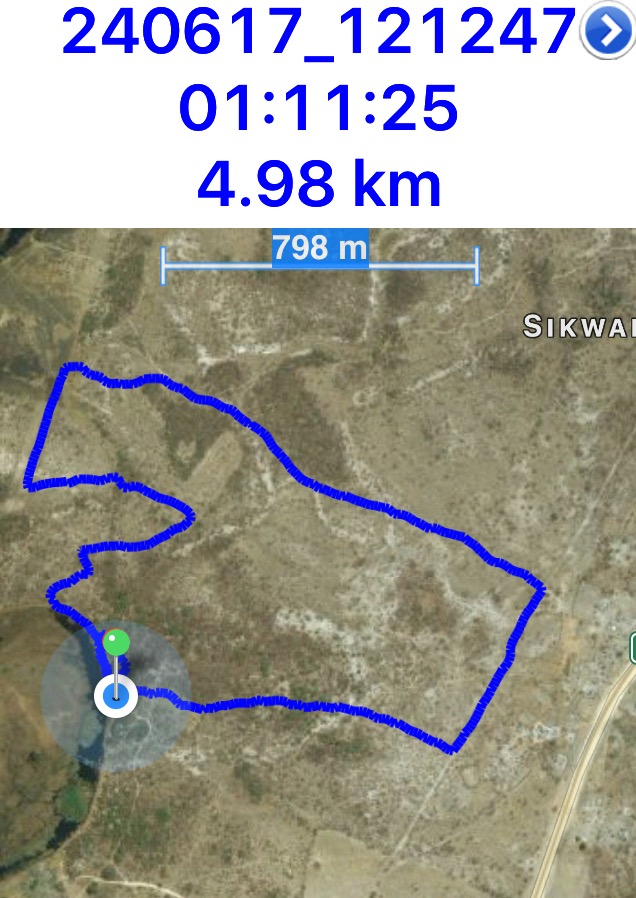
Traversing from the Buffalo core area near Divindu to the Bwabwata Core area near Kongola, on both sides of the B8 highway, we traversed some 8000 square kilometers in 7 days. At an average speed of 15km’s we crisscrossed the Strip seeing places very few residents and fewer tourists experience – sometimes in heart-stoppingly thick sand. My dream come true.; I got the Land Cruiser to drive!

Up before first light we shiver into jeans, tackies and warm tops. Gathering around the fire and drinking strong coffee and dunking rusks. Thick slices of bread and jam provide breakfast for the bushmen and the dogs get a slice of bread and butter to provide sustenance for the day ahead. (Thanks to Clive who was up early every day to stoke the fire!). Racing off to our appointed starting grid, armed with water and nibbles to keep us going until 11 or so, we started as soon as the light allowed; driving slowly along the sandy tracks recording all carnivore as well as lion’ preferred prey species spoor. Brunch was served at the camp and chores were completed before a rest, repacking the car and setting out again for another transect or two. Innovative camp meals, quiet conversations, planning, chatting, and bed – not always so early either.

A small dish of warm water in your tent. “Strip off your top, wash your face and body as far down as possible. Bundle up in your pajama top. Strip off your bottom half, wash up as far as possible. Try to clean your feet or just put on a pair of socks to keep your bedding clean. A wet wipe for Possible and bed!”
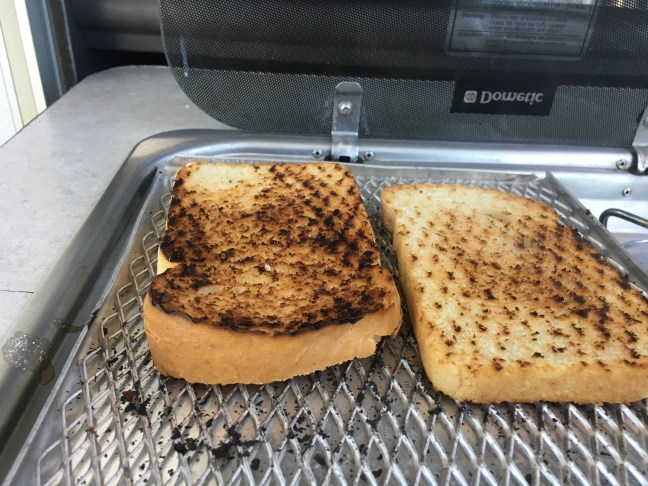
Does the left hand know what the right is doing?

144

Since selling the farm I have taken to baking my own bread in my fancy microwave’s convection oven.  I am convinced that the preservatives in our modern diet contribute to the high incidents of cancer we are all experiencing.   We are unable to use the microwave in Mukolo Camp as it uses huge amounts of electricity and the solar panels drain surprisingly quickly with careless use.  We purchase our daily bread from the corner store and on the odd occasion that they are sold out I make my son-in-law’s pot bread which is fantastic with livers and stews.

It has been many years since I have cut bread regularly but I pride myself on a nice straight slice (store bought breads all come sliced these days).  It has taken me some six weeks to understand why I have been cutting skew ‘door-stop’ slices and what to do about it.

Both Clive and I slice the bread on its side to prevent the bread breaking up.  We place the bread on the board with the top crust facing away from us.  If I start cutting a new loaf each slice is perfectly straight.  If Clive starts cutting a new loaf each slice is perfectly straight.  But every time we carry on slicing the ‘other person’s’ loaf the first slice is a disaster – because he cuts with his left hand and I with my right.

Solution?  I now cut with the top crust facing me on the board so that I carry on with the gentle curve neither of us is aware we are making!

100 Birds

In honour of two people dear to my heart, Dave Conradie and Robbie Vermont, both of whom would have had over 300 birds, I submit my 100 birds seen on the trip!

Trip: Namibia
Date: 25 May ’17 to 28 Jun ’17
Species seen: 💯

Pied Crow, 25 May ’17 7:29am
Laughing Dove, 25 May ’17 7:29am
Cape Glossy Starling, 25 May ’17 8:22am
Lilac-breasted Roller, 25 May ’17 8:23am
African Grey Hornbill, 25 May ’17 8:25am
Southern Fiscal, 25 May ’17 8:29am
Magpie Shrike, 25 May ’17 8:31am
Southern Yellow-billed Hornbill, 25 May ’17 8:42am
Grey Go-away-bird, 25 May ’17 8:46am
Helmeted Guineafowl, 25 May ’17 8:58am
Green Wood Hoopoe, 25 May ’17 9:12am
Southern Red-billed Hornbill, 25 May ’17 9:25am
Fork-tailed Drongo, 25 May ’17 9:39am
Southern Ground Hornbill, 25 May ’17 12:36pm
Speckled Mousebird, 26 May ’17 9:36am
White-backed Vulture, 26 May ’17 11:16am
Rock Dove, 26 May ’17 11:55am
African Hoopoe, 26 May ’17 12:24pm
Dark-capped Bulbul, 26 May ’17 2:10pm
Natal Spurfowl, 26 May ’17 2:11pm
Black-backed Puffback, 26 May ’17 3:41pm
Southern Pied Babbler, 27 May ’17 8:12am
Crimson-breasted Shrike, 27 May ’17 8:17am
Namaqua Dove, 27 May ’17 9:33am
White-browed Sparrow-Weaver, 27 May ’17 9:43am
Red-billed Oxpecker, 27 May ’17 9:51am
Southern White-crowned Shrike, 27 May ’17 9:52am
Lappet-faced Vulture, 27 May ’17 11:19am
Red-billed Spurfowl, 27 May ’17 2:22pm
Southern Black Flycatcher, 27 May ’17 2:23pm
Crowned Lapwing, 27 May ’17 3:26pm
Speckled Pigeon, 27 May ’17 3:51pm
Grey Heron, 27 May ’17 3:56pm
Black-necked Grebe, 27 May ’17 4:12pm
Black Heron, 28 May ’17 7:36am
Red-billed Teal, 28 May ’17 10:08am
Egyptian Goose, 28 May ’17 10:08am
Burchell’s Sandgrouse, 28 May ’17 10:11am
White-faced Whistling Duck, 28 May ’17 10:14am
Common Moorhen, 28 May ’17 10:58am
Little Grebe, 28 May ’17 11:00am
Swallow-tailed Bee-eater, 28 May ’17 11:34am
Southern Grey-headed Sparrow, 28 May ’17 2:14pm
Arrow-marked Babbler, 28 May ’17 5:46pm
Bateleur, 29 May ’17 8:54am
Helmeted Guineafowl, 29 May ’17 9:13am
African Fish Eagle, 29 May ’17 10:00am
Southern Ground Hornbill, 29 May ’17 10:48am
Spectacled Weaver, 29 May ’17 4:34pm
Great Egret, 29 May ’17 4:42pm
Red-eyed Dove, 29 May ’17 4:55pm
Green-backed Heron, 29 May ’17 4:55pm
Pied Kingfisher, 30 May ’17 8:32am
Greater Blue-eared Starling, 30 May ’17 10:55am
Tropical Boubou, 30 May ’17 11:39am
Grey-headed Bushshrike, 30 May ’17 11:50am
Long-billed Crombec, 30 May ’17 12:03pm
Reed Cormorant, 30 May ’17 3:13pm
African Jacana, 30 May ’17 3:34pm
Water Thick-knee, 30 May ’17 3:46pm
Spur-winged Goose, 30 May ’17 3:59pm
Knob-billed Duck, 30 May ’17 3:59pm
African Spoonbill, 30 May ’17 4:07pm
African Wattled Lapwing, 30 May ’17 4:14pm
Western Cattle Egret, 30 May ’17 4:36pm
Yellow-billed Stork, 30 May ’17 4:43pm
Little Egret, 30 May ’17 4:53pm
Malachite Kingfisher, 30 May ’17 5:11pm
White-breasted Cormorant, 30 May ’17 5:29pm
African Sacred Ibis, 30 May ’17 5:31pm
Southern Ground Hornbill, 31 May ’17 9:14am
Barn Swallow, 31 May ’17 10:03am
Lesser Striped Swallow, 31 May ’17 10:04am
Bateleur, 31 May ’17 1:26pm
African Pygmy Goose, 1 Jun ’17 10:02am
Burchell’s Starling, 1 Jun ’17 10:25am
Little Bee-eater, 1 Jun ’17 4:37pm
Fork-tailed Drongo, 1 Jun ’17 4:45pm
Black Crake, 2 Jun ’17 7:14am
Saddle-billed Stork, 2 Jun ’17 10:25am
Swamp Boubou, 2 Jun ’17 2:45pm
Emerald-spotted Wood Dove, 2 Jun ’17 3:59pm
Burchell’s Coucal, 2 Jun ’17 5:31pm
Blue Waxbill, 2 Jun ’17 5:57pm
Burchell’s Sandgrouse, 3 Jun ’17 4:55pm
Red-billed Spurfowl, 3 Jun ’17 6:02pm
Hamerkop, 3 Jun ’17 6:09pm
Fiery-necked Nightjar, 4 Jun ’17 6:37am
Goliath Heron, 4 Jun ’17 1:31pm
White-fronted Bee-eater, 4 Jun ’17 1:31pm
Cardinal Woodpecker, 4 Jun ’17 4:30pm
African Wood Owl, 5 Jun ’17 10:05pm
Black-collared Barbet, 6 Jun ’17 3:14pm
African Mourning Dove, 8 Jun ’17 8:19am
African Yellow White-eye, 10 Jun ’17 7:45pm
Meyer’s Parrot, 11 Jun ’17 5:15pm
White-crested Helmetshrike, 12 Jun ’17 3:17pm
Green Wood Hoopoe, 13 Jun ’17 12:51pm
Lesser Jacana, 13 Jun ’17 5:30pm
Emerald-spotted Wood Dove, 14 Jun ’17 2:32pm
Black-bellied Bustard, 14 Jun ’17 3:53pm
Amur Falcon, 14 Jun ’17 3:54pm
African Openbill, 14 Jun ’17 4:54pm
Purple Heron, 18 Jun ’17 11:26am
Yellow-billed Oxpecker, 19 Jun ’17 5:28pm
Fork-tailed Drongo, 20 Jun ’17 4:54pm
Greater Painted-snipe, 24 Jun ’17 5:12pm
Hartlaub’s Babbler, 26 Jun ’17 12:06pm
Southern White-faced Owl, 27 Jun ’17 9:37pm
Orange-breasted Bushshrike, 28 Jun ’17 3:51pm

via BirdLasser

Circles in the Forest

The area around camp is indigenous vegetation, mainly silver cluster leaf and scattered shrubs. Impenetrable in some places

IMG_1746

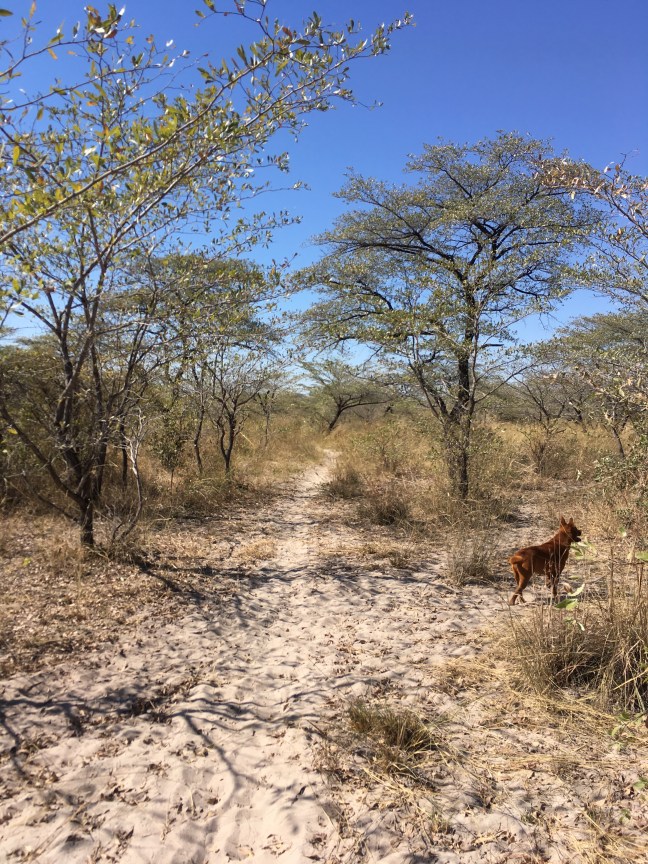
Paths to and and from the many villages turn and twist and call us to explore.

IMG_1743

The sand is deep and sparkles silver in the sun, filling our tekkies and making them feel smaller and smaller as the walk progresses

Hatchiko delights in running through the underbrush chasing squirrels and flushing coucals from hiding. The odd duiker runs like the wind as she exhausts herself exploring endless delights and then heading off determinedly  in the direction of home. Waiting in the path ahead only long enough to ensure we are following.

IMG_1747

A very satisfying world to explore spiced by numerous elephant droppings that just warn us to take care


Humphrey

IMG_1589.JPGFruit Bats crying from the trees at night. Mourning Doves growling softly from the trees by day (google them! Its worth it) Mukolo Camp is now our home. Friendly, relaxed smiles and waves from people who walk miles for water and basic food. The highlight of the day is a boiling hot shower to wash the dust off and clean feet before bed.

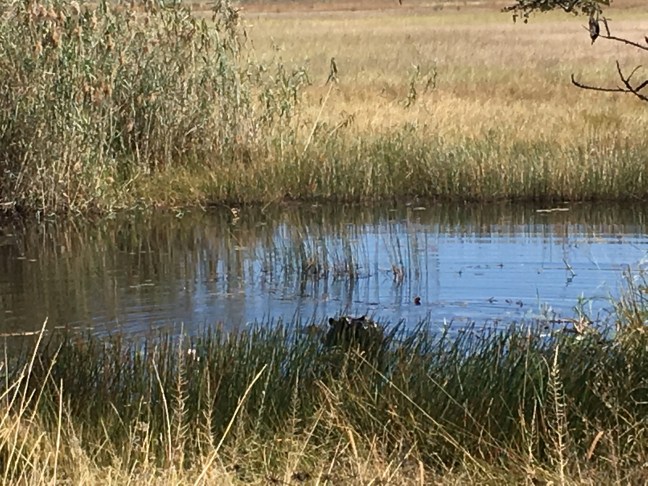
Our resident hippo, Humphrey, is a friend of Eeyore. They share a sad face and less than brave disposition. We watched a whirlwind cross the flood plain, bending grass and reeds as it swept closer and closer towards us. As it crossed the river it turned into a water spout and headed for Humphrey, settling precisely over his head! He ducked under the water to escape the vortex and as soon as it had passed he lurched out of the water which had betrayed him, and headed for land. No sooner had he got to safety than the resident Namibian Wolfhound, Timmy, bayed a warning and chased Humphrey into the reeds to cower as much as a 3 tonne hippo can!

The roads in our area are very good and call us to explore. Names we cannot pronounce promise nothing but a collection of homesteads and a conservancy office with a central ‘entertainment hut’ that sells beer, airtime vouchers and may offer a snooker table out of the hot sun.

Data and more Data…

Spending more than a few hours in a camp chair entering data into a laptop calls for a little exercise to get the blood flowing again. Frustrated trips to the ‘wifi tree’ to see if the signal has improved are interspersed by perambulations around camp. With the SA school holidays looming the owners of Mukolo Camp are gearing themselves up for the seasonal rush, but for now the camp has mainly student or research groups coming and going. Still no sign of the river rising but there are reports of good rains in the catchment areas of Angola. Locals still say the water is on its way.

IMG_0717

The flood plains outside our camp are an intriguing mix of dry land, peat bogs, rivers and dams. Hatchiko thinks she is in the best doggy play ground there is and runs helter skelter through the grass so long you cannot see her at all; Her bell giving her position away. Occasionally she will either stand on her hind legs to peer over the grass or pronk in exhaustive leaps to progress faster than battling the grass at ground level allows. Clive shared his vision of a crocodile waiting, mouth agape, in one of the ponds – Along comes a flying dog and pronks directly into its mouth! Needless to say it makes for a tense few minutes when we loose sight of her. The easiest paths often turn out to be hippo paths and lead you directly into the water but the topography is flat and the visibility over 100m in any direction so apart from the crocks we feel safe enough to wonder over the changing landscape.

The ‘strip’ is 20 miles wide and was given, along with the most troublesome tribes in the area, to the Germans in 1890 to provide access to the Indian Ocean via the Zambezi river in exchange for Zanzibar. They neglected to inform the German Chancellor Leo von Caprivi of a small blockage downriver called the Victoria Falls. The result is a pretty, 450km strip from Namibia main to the boarder of Zambia, Zimbabwe and Botswana which until recently was beset by tsetse fly and political wrangling. The constant movement of the river through the flood plains makes borders hard to define and it is possible to inadvertently drive from one country to another while on a game drive! Successful efforts to control the tsetse fly over the last 40 or so years has lead to an increase in human settlements and subsistence farming.

Traveling the 110 km’s along the main road from Kongola to Katima Mulilo for fresh meat and veg allows us to admire the many villages that have sprung up. They are quite picturesque presenting interesting combinations of grass, reeds and white sand. Due to the fires that sweep through the area annually each settlement has a large vegetation free border around it. The schools are clean and neat and well maintained. There are no fences around anything and the big-5 wander through the ever narrowing corridor between Botswana and Zambia with very little impact on the residents.

In all a fascinating part of Africa.

Kasane to Mukolo Camp

An 8:30 start had us at the border by 10am. We were through the Botswana side very quickly with no interest shown in Hatchiko or her paperwork. A hitch at the Namibian side kept us slightly longer but we were processed and on our way again by 11am. There seems to be a problem with our intended length of stay – you are only allowed 3 months a year in Namibia so our idea of a leisurely trip from north to southern Namibia during September will need to be changed into a three or four day dash for the boarder at the end of August. We will need to apply for Hatchiko’s import permit in July to ensure that we can being her back into the country. I also have to get a work permit and present it at the border. They have given me a month to sort out the paperwork but Clive can stay until the 29th August. We will discuss this with our employers and may need to leave Namibia and come in again.

There is a totally different feel to the country; the roads seem to be in better condition. There are villages and homesteads scattered along the road at regular intervals and the herds of cattle are much larger than any we saw in Botswana. We have seen one deposit of elephant droppings but there is no evidence of wildlife preserves.

Wood for sale on the side of the road makes you realize that we did not see any in Botswana.

A warm welcome awaited us at Mukolo lodge and the van was installed in short order. We were not very happy on our stand as it was adjacent to the road and a fine grey dust covered everything as soon as a vehicle passed. Hennie kindly offered us another stand and we have relocated to the river – a prime stand and very kind of them considering the discounted rate we are paying.

The lady I will be working for is in Windhoek suffering from an annual outbreak of Malaria which she seems to be hosting. We have had an enjoyable two days getting acquainted with our new world and its birdlife. A study of the map and consulting the locals has opened a world of opportunities in the immediate area for game and scenic drives. The workload promises to be interesting and heavy with volunteer opportunities for Clive. I think it will be a very short three months.

Elephant Sands to Kasane

We left Elephant Sands at 8:15am for the 250km’s to Kasane – The first stop off that did not have pre-booked ‘pet friendly’ accommodation waiting for us. There are scattered picnic areas alongside the road north of Nata that are very nicely positioned, clean and in good repair – an improvement on the others seen along the road. Truck drivers use these stop off’s extensively.

Giraffe and zebra on the side of the road! The first game we have seen.

It took nearly an hour to travel through the Department of Crop Production’s cordon with vast fields of ploughed land. A few subsistence and small scale farmers were also living and working around the agricultural hub of Pandatenga.

The strait ‘Roman Road’ started winding gently just outside Kasungula. A slight rise in the road allowed us to appreciate the depth and richness of the vegetation rolling on as far as the eye can see. We arrived in Kasane at 12:15; the search for accommodation begins. It appears as if there is limited camping and very few caravan sites in the area. The formidable Chobe Lodge looked so expensive we turned around without even asking their fees. We were on the point of driving for the boarder to find accommodation in Katima Malilo or just pressing on to Mukolo lodge when a little sand road led us to The Big-5 Chobe Lodge. A pet friendly ‘affordable’ caravan park right on the Chobe river! We booked in for two nights to allow for a river boat cruse on the Chobe which had been recommended to us. The lodge offered a small (8 seater) boat at P300 per person. The Rand/Pula exchange rate has risen to 1.58. A new Shopright has opened and we purchased braai meat for dinner but unpacked the gas braai when we found out that wood costs P100- P150 per bundle!

The following day was spent housekeeping, washing and bird watching. Very enjoyable and the time passed quickly until our boat ride at 2:30pm. The lodge supplied a shuttle service and we were lucky enough to arrive first to grab the front seats. The river trip was like a movie scene. The elephant unbelievable and the entire experience a lifetime memory.

We were quiet through our fish dinner and into bed with hearts and minds reliving the experience.

Elephant Sands

Yesterday evening as the sun was setting the first elephant bull came down to drink. Management provide a small trickle of clean water that the elephant love. Standing just inside the light the elephant drink, rumbling and swaying from side to side to the amazement of the guests. No flash photography was allowed and the only spotlights are used by management to deter elephant who wonder too closely to campers or buildings. There are no fences or other barricades and the elephant wonder freely through the camp.

A welcome day of rest to absorb the ambiance and to take a breath. The salt pans that were on our list are covered in water and apparently look like huge lakes. We decided not to go and see them and elected to visit the local watering holes instead.

The 4×4 was used extensively to negotiate the thick sands and there were a number of roads under water. We took care not to get trapped between the water and the many family groups of elephant. Large bulls moved with interested cows and there were many little fluffy elephant entertaining in their clumsiness. We counted in excess of 65 elephant in the stunted mopane veld that has sustained them for generations. The only buck we saw were two steenbokkies, no spoor or droppings either making us wonder what sustains the large lion population we could hear.

A lazy afternoon was topped off by a superb steak and veggies at the lodge while Hatchiko waited in the van. When we went back to let her out she started growling before she was outside. Looking over my shoulder I saw an enormous grey shape emerging from the night about 4m away. Hatchi gave a sharp bark and the elephant ran squealing in the direction of the dam. I was reminded of the story of the elephant and the mouse! Hatch was very proud of herself!

Coffee, a whiskey and bed. What a day.

Francistown to Elephant Sands, Nata

We started the day with a detour back to Francistown for diesel at 8am. The 9km’s of sand road from Woodlands to the tar road was slow going. Yesterday Francistown was gridlocked due to roadworks so we elected to drive through without stopping yesterday. We found a shell garage outside town, easy and friendly – we were on our way to Elephant Sands by 8:45.

Approximately 20km’s from Nata oncoming trucks started flashing lights to warn of a badly potholed section of the road with a bypass graded to the side in really bad sections. A bakkie towing a bakkie were jack knifed in the middle of the road stopping traffic in both directions. A miraculous near miss as a huge truck and trailer took to the side slope to avoid a collision. We found that the best policy for negotiating the deteriorating road surface was to ‘adopt a truck’. They travel between 80 and 90 km’s/hr which gives you plenty of warning to avoid road hazards such as potholes, donkeys or goats. Intriguing ‘twee spoor paitjies’ disappear into the bush. We passed an invisible ecological line near the small village of Dukwe and baobab trees started lining the roads offering perfect picnic stopovers.

Potholes, especially on the left hand side made driving at 20km’s advisable. A quick grocery shop (the Rand/Pula exchange rate has risen from 1.40 to 1.65) and we were on our way to Elephant Sands 50km’s north of Nata. There is a markedly different smell to the air – some type of vegetation?